Why cells need balancing and how it is done
, 1 min read
In a pack of many cells, small differences grow over time. Balancing keeps them equal so one weak cell does not cap the whole pack.
The article below is in English. The summary and Listen are in your language.
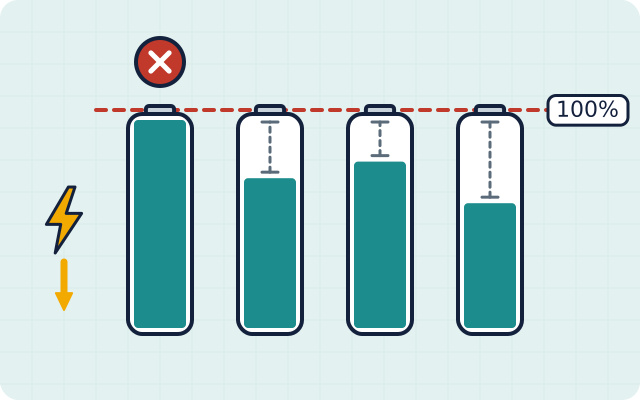
A pack is only as strong as its weakest cell. Balancing is how the BMS keeps every cell pulling its weight.
How cells drift apart
Even cells from the same batch are slightly different. Over many cycles, tiny differences in capacity and self-discharge add up. Soon one cell reaches 'full' before the others on charge, and 'empty' before the others on discharge. The BMS must stop at that first cell, so the whole pack loses usable range.
Passive balancing: bleed the strong ones
Most scooter and e-rickshaw packs use passive balancing. When charging, the BMS switches a small resistor across any cell that is running ahead, bleeding off a little energy as heat so the slower cells can catch up. It is simple and cheap but slow, and it wastes a little energy.
Active balancing: move energy around
Costlier packs use active balancing, which shuttles charge from fuller cells to emptier ones instead of burning it off. It is faster and wastes less, and it helps most when cells have drifted a lot.
Passive balance currents are small, often tens to a few hundred milliamps, so balancing a badly drifted pack can take many charge cycles. This is why a new or repaired pack should be left to 'top balance' fully before heavy use.
You can watch balancing in the cell balancing experiment in the EV Lab.