Thermal runaway: what causes it and how packs prevent it
, 1 min read
Thermal runaway is the worst failure a lithium pack can have. Understanding the chain helps you prevent it.
The article below is in English. The summary and Listen are in your language.
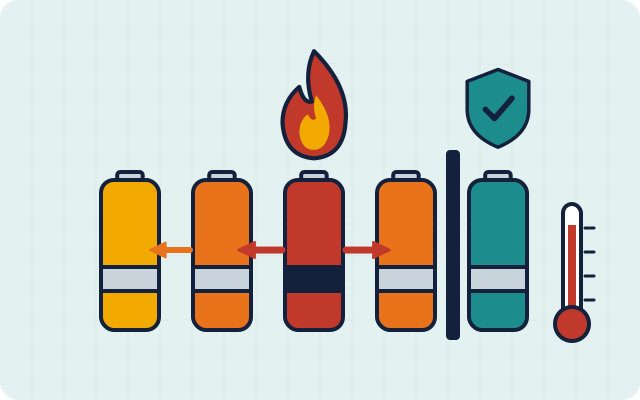
Thermal runaway is the rare but serious failure where a cell overheats, releases energy, and heats its neighbours until the pack catches fire. Good design and good habits make it very unlikely.
The chain reaction
It starts when one cell gets too hot, from a short, overcharge, physical damage or a manufacturing flaw. Above a certain temperature the cell's internal chemistry breaks down and makes its own heat and gas. That heat can push the next cell over the edge, and so on.
How packs are designed to stop it
A safe pack keeps cells from getting too hot in the first place, spaces them so heat does not jump easily, and uses a BMS that cuts current on over-temperature, over-voltage and over-current. Fuses and good welds stop shorts. Some packs add fire-resistant barriers between cells.
Prevention rests on three layers: cell quality, mechanical and thermal design that limits propagation, and electronic protection. No single layer is enough on its own.
What riders and technicians can do
Never charge a swollen, dented or water-damaged pack. Use the correct charger. Do not leave a charging vehicle unattended overnight in a closed room. In a workshop, charge packs in a clear, ventilated area away from anything that can burn, and keep a suitable extinguisher nearby.