Real range vs claimed range: why they differ
, 1 min read
The number on the brochure is measured in ideal conditions. Here is why your range is lower, and by how much.
The article below is in English. The summary and Listen are in your language.
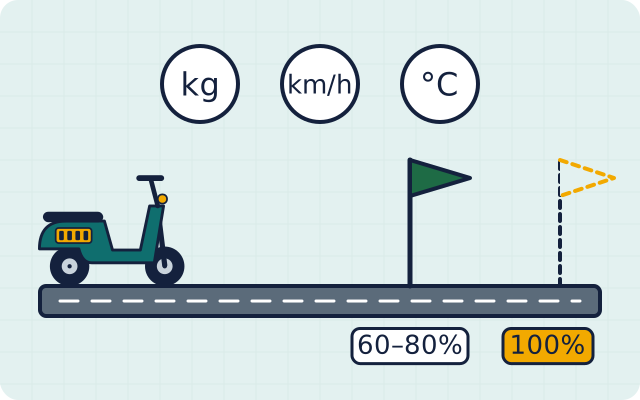
Almost every EV does fewer kilometres in real life than the brochure claims. That is not cheating; it is how the figures are made.
How claims are measured
Claimed range comes from a standard test at steady, gentle speeds with no load extras. Real roads have traffic, hills, wind, a rider and luggage, and you use the brakes, lights and sometimes air-conditioning.
What eats range
Higher speed costs a lot (air drag rises quickly), as do heavy acceleration, cold or very hot weather, under-inflated tyres and a loaded vehicle. These together can take real range well below the claim.
Expect real range to be roughly 20-40% below the claim for many vehicles, more if you ride fast. Plan around a realistic figure, not the brochure number.
When comparing vehicles, treat claimed range as a yardstick for comparison, and budget your own trips on a realistic, lower number.