Precharge circuits: why you can't just close the contactor
, 1 min read
Connecting a big pack to the controller in one step can weld the contacts. A precharge circuit prevents it.
The article below is in English. The summary and Listen are in your language.
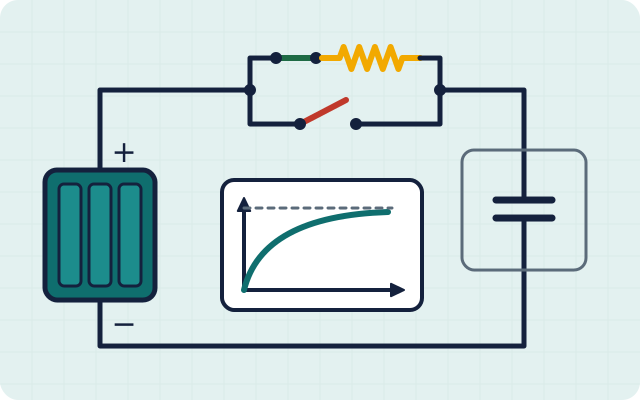
In a high-voltage EV, you cannot simply slam the battery onto the controller. Doing so causes a huge inrush of current.
The inrush problem
The controller has large capacitors that are empty at start-up. Connecting the full pack straight to them is like opening a tap onto an empty tank: a massive surge flows for an instant. That surge can weld the contactor contacts shut, which is dangerous because the pack can then never be disconnected.
How precharge solves it
A precharge circuit first connects the pack through a resistor, which limits the current and lets the capacitors fill gently over a fraction of a second. Once they are nearly full, the main contactor closes with almost no surge, and the resistor path opens.
A typical sequence: close the precharge relay (pack to caps through a resistor), wait until the capacitor voltage is within a few percent of pack voltage, close the main contactor, then open the precharge relay.
Skipping or breaking the precharge is a common cause of welded contactors and tripped systems.