Fast charging vs slow charging: what it does to the battery
, 1 min read
Fast charging is convenient but harder on the pack. Here is the honest trade-off and when to use each.
The article below is in English. The summary and Listen are in your language.
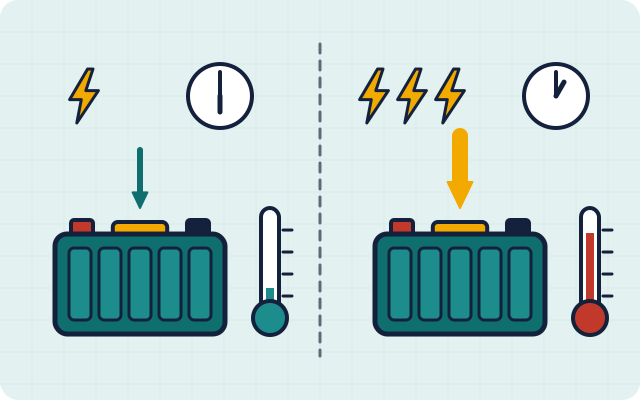
Fast charging fills the pack in minutes instead of hours. It is a great convenience, but it is not free: it asks more of the battery.
Why fast charging is harder
Pushing a lot of current in makes heat inside the cells and stresses their chemistry. Done often, especially when the pack is hot or very full, it ages cells faster than gentle charging. That is why fast chargers usually slow down above about 80% and when the pack is warm.
When slow charging wins
Slow AC charging overnight is gentle, cheap at home tariffs, and perfectly fine for daily commuting. If your vehicle sits parked anyway, there is no reason to fast charge it.
DC fast charging bypasses the on-board charger and feeds the pack directly, under BMS control. The BMS tapers the current as cells fill and as temperature rises, which is why the last 20% always takes longer.
A sensible rule
Use slow charging for everyday top-ups and keep fast charging for long trips or days when you genuinely cannot wait. Charging to about 80% on a fast charger is kinder than forcing the last 20% in. A pack that mostly sips and occasionally gulps will outlast one that is always fast charged hot and full.