Battery swapping: how it works and who it suits
, 1 min read
Instead of waiting to charge, you trade an empty pack for a full one. Here is where it makes sense.
The article below is in English. The summary and Listen are in your language.
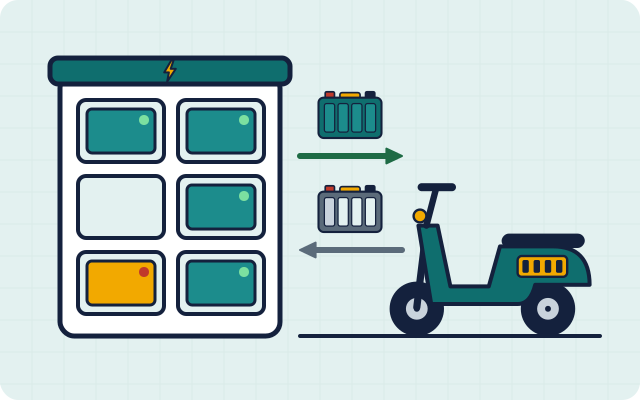
Battery swapping skips the wait entirely: you drop an empty pack and pick up a charged one in a minute or two.
How it works
The vehicle uses a standard removable pack. At a swap station, you return the low pack, which goes into a charging rack, and take a fully charged one. You usually pay for the energy or a subscription, not for the pack itself.
Who it suits
It shines for high-use fleets that cannot afford downtime: delivery riders, e-rickshaw drivers and gig workers. The vehicle is cheaper because you may not own the battery, and there is no charging wait.
Swapping needs standard pack shapes and connectors, and a network of stations. The pack is leased and managed centrally, so its health is the operator's responsibility, not the rider's.
For a private owner who parks at home, home charging is usually simpler; for busy commercial riders, swapping can change the economics.