AC vs DC charging: the real difference
, 1 min read
Every EV charges on AC or DC. The difference is where the current is converted, and it decides charging speed.
The article below is in English. The summary and Listen are in your language.
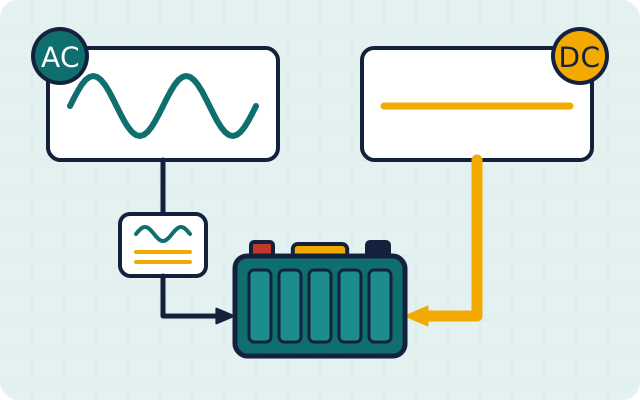
People talk about 'AC' and 'DC' charging as if they were different fuels. The real difference is simply where the conversion happens.
AC charging
The grid supplies AC. In AC charging, the power goes into the vehicle and the car's own on-board charger turns it into the DC the battery needs. The on-board charger is small, so AC charging is slow but cheap and fine at home or work.
DC charging
A DC fast charger does the AC-to-DC conversion in the big roadside unit, then feeds DC straight to the pack under the BMS's control. Because the heavy equipment is outside the vehicle, it can push far more power, filling the pack in minutes.
Home AC charging for a scooter is often a few hundred watts to a couple of kW; a car's on-board charger is typically 3.3 to 7.2 kW. DC fast chargers range from 25 kW to well over 100 kW.
Use AC for daily charging and DC for the occasional quick top-up on a long day.